
The Environment
The D.C. metro concentrates government contractors, national associations, nonprofits, policy organisations and large healthcare and education institutions.
Washington, D.C., United States
Mobile accessibility in Washington is a contract requirement, not a quality preference. Section 508 applies to apps as it does to websites, and the mobile version has its own criteria — VoiceOver and TalkBack navigation, dynamic type support, touch target sizing, and behaviour that does not break when a user increases system text to maximum. Pixlabo builds D.C. apps to those criteria and tests with assistive technology through development, so you can produce evidence rather than an assurance. We work overlapping Eastern hours from India.
What the local environment means for a app development project in Washington, D.C..
The D.C. metro concentrates government contractors, national associations, nonprofits, policy organisations and large healthcare and education institutions.
Accessibility obligations flow downward. An agency requires it of a contractor, who requires it of a vendor, and an app that cannot evidence conformance is removed from consideration before its quality is assessed.
Mobile accessibility is also less well understood than web accessibility, which means it is frequently claimed and rarely tested. Organisations that can actually demonstrate it are competing against a low baseline.
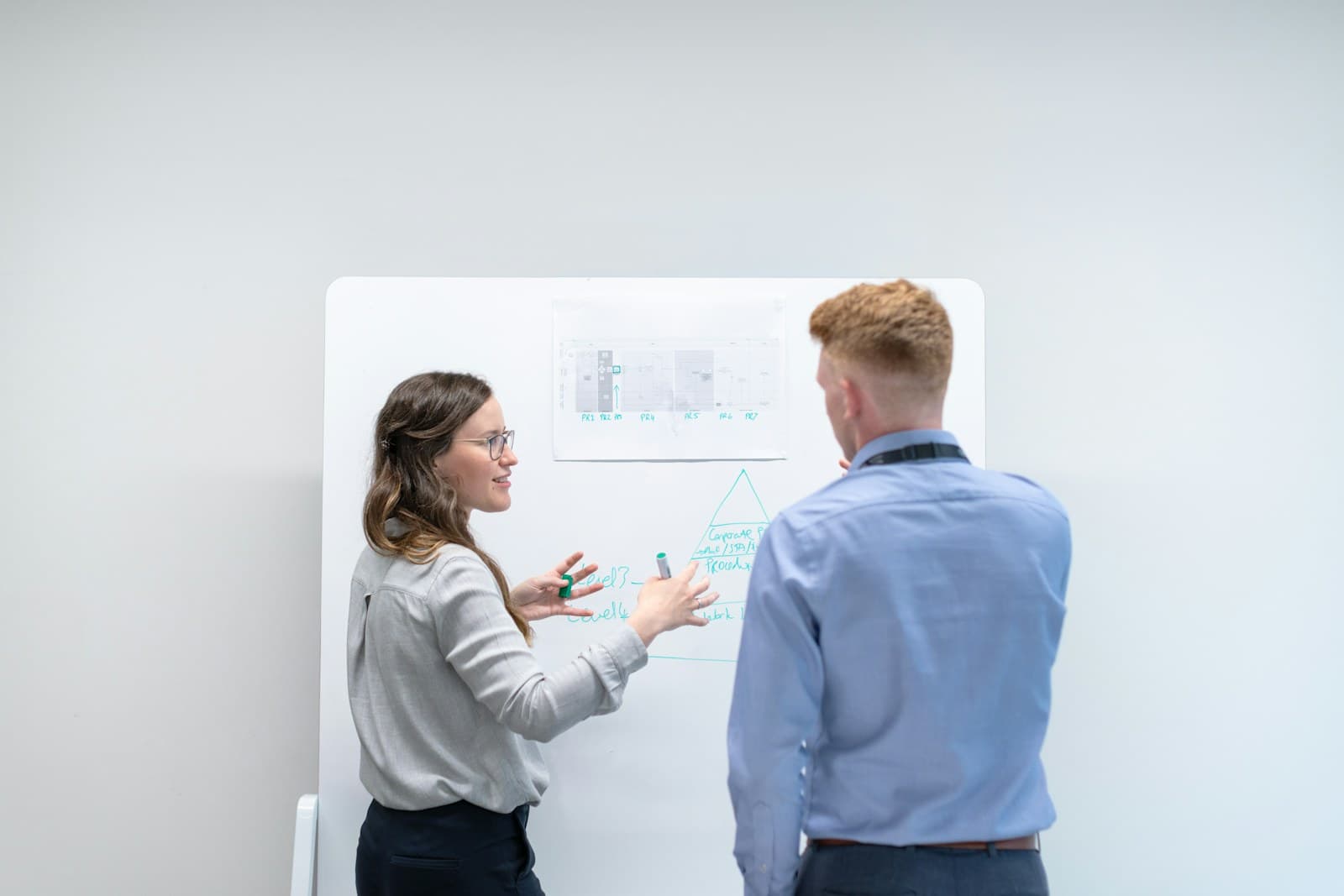
Good development starts by understanding the operational problem—not by choosing technology first.
Problems worth solving
Web accessibility gets attention; mobile rarely does. Apps ship without VoiceOver or TalkBack testing, break at large dynamic type sizes, and use touch targets below minimum. Discovering this during a contract review is expensive and public.
Custom controls built without correct roles, labels and state announcements are invisible or unusable to screen reader users. Platform components carry this behaviour by default; bespoke ones must implement it deliberately.
Users who need large text are precisely the ones accessibility requirements exist to protect. Layouts that clip, truncate or overlap at maximum dynamic type fail both the user and the review.
Contract vehicles require accessibility conformance reports, security documentation and sometimes a mobile-specific VPAT. Assembling these after award delays delivery in a process that moves on fixed schedules.
An app delivered under a contract with no maintenance provision degrades through platform updates until it fails, often before the contract period ends.
App Development
End-to-end app development capabilities selected to create a practical, maintainable solution for businesses in Washington, D.C..
Built to WCAG 2.2 AA as applied to mobile, tested with VoiceOver and TalkBack through development rather than audited at the end.
Roles, labels, state announcements and focus order implemented deliberately where platform components are not sufficient.
Layouts verified at maximum system text sizes, so they reflow rather than clip or overlap.
Mobile accessibility conformance reports and VPAT support produced as project artefacts for contract use.
Device data handling and session behaviour appropriate to government-adjacent work, with graceful degradation when connectivity is poor.
Annual platform and SDK maintenance scoped explicitly so multi-year contracts fund keeping the app functional.
Applications by sector
Business applications relevant to Washington, D.C..
Field, inspection and citizen-facing apps meeting Section 508 with evidence suitable for contract review.
Member, event and credentialing apps with accessible flows and membership rules modelled properly.
Programme, volunteer and donation apps where accessibility is a credibility requirement as much as a legal one.
Patient-facing apps with data minimisation and accessible intake and scheduling.
Student and staff apps meeting institutional accessibility policy with demonstrable conformance.
Opportunity roadmap
App Development in Washington, D.C.
Mobile accessibility is widely claimed and rarely tested. Being able to produce a report is a genuine competitive position here.
Retrofitting accessibility into a finished app frequently means rebuilding custom components that were never structured for it.
Conformance reports and security documentation have lead times, and procurement moves on fixed schedules.
An unmaintained app fails before a multi-year contract ends, which is a delivery failure rather than a technical one.
Development process
A systematic, risk-aware approach that takes a app development project from requirements and planning to controlled release and ongoing improvement.
Delivery phases
One accountable workflow
Establish the use case, the applicable accessibility obligations and the first-release scope.
Interfaces designed for screen reader navigation, dynamic type and touch target sizing from the start.
Platform choice, device data handling and offline behaviour agreed before build.
Development with VoiceOver and TalkBack testing continuously rather than at the end.
Full assistive technology audit with documentation prepared for contract use.
Staged rollout with a funded maintenance plan covering the contract period.
Every stage creates something your team can review.
Requirements Measured improvementBuyer's guide
Selecting the right app development partner requires looking beyond the portfolio to understand their engineering culture, delivery process and business alignment in Washington, D.C..
Web accessibility experience does not transfer automatically. Ask whether they test with VoiceOver and TalkBack, and at what dynamic type sizes.
If a partner has never produced one, you will be the first, on a contract where evidence is required.
Bespoke controls need roles, labels and state announcements implemented deliberately. A partner who has not considered this will ship inaccessible components.
An app with no maintenance provision fails during the contract period through platform change alone.
Store accounts should be in your organisation's name. For public sector work this is frequently a contractual requirement as well as good practice.
Nearby service coverage
Pixlabo works with organisations across the D.C. metro including Arlington, Alexandria, Bethesda, Tysons and Silver Spring, and publishes structured coverage for nineteen other United States metros. A metro page is not a claim of a local office — Pixlabo is based in India and works with D.C. clients remotely on overlapping Eastern hours.
App Development · Washington, D.C.
Practical answers about project scope, delivery, integrations and ongoing support.
If you are scoping a mobile application for a Washington organisation, the useful first conversation covers your accessibility obligations and what evidence you will need to produce. Bring the contract requirements, who reviews conformance, and the use case itself. We will tell you what mobile Section 508 genuinely requires, what testing we do and when, and what documentation you will hold at handover. If your existing app can be remediated rather than rebuilt, we will say so — though for apps built with many custom components, that is not always the cheaper path.
Project discussion for Washington, D.C.
Start a discovery conversation