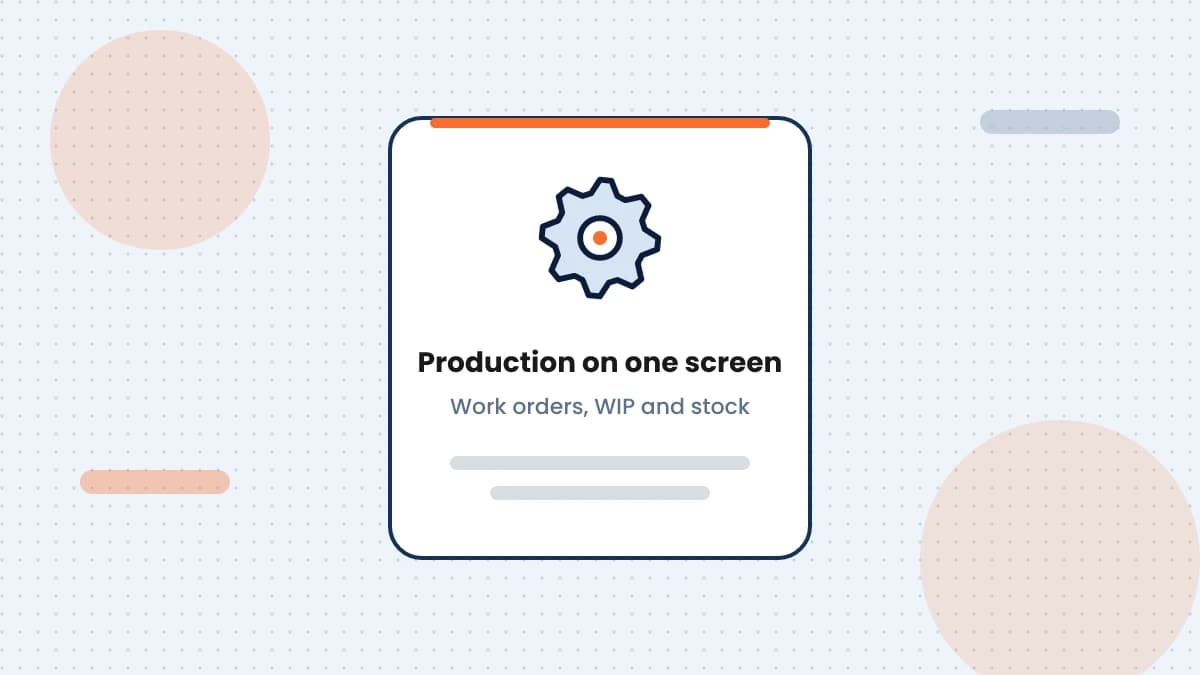
Manufacturing ERP

Multi-level BOMsGST job work recordsKeep Tally for accountsNo licence lock-in
BOM + MRP
Planned against orders
BOM + MRP
Planned against orders
Job work
Challans and ITC-04
Live cost
Per work order
You own
Code, data & hosting
Problems we solve

Visibility01

Nobody can see where an order stands

Production status lives in registers and phone calls. Work orders with stage-wise progress show every order on one screen, so delays surface while they can still be fixed.
Costing02

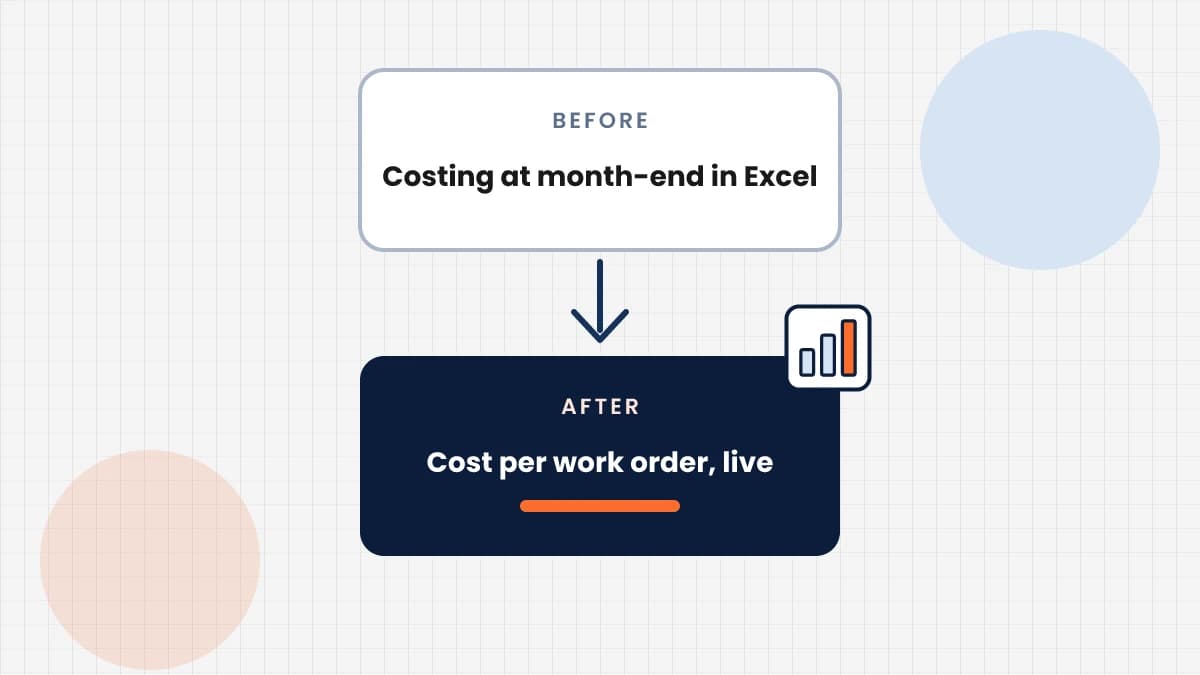
Costs known only at month-end

BOMs in Excel and costs pulled together late mean you learn about losses after the fact. Cost per work order from actual material and hours shows margin as you go.

Materials03

Shortages stop the line

A missing component is noticed when it is needed. MRP compares orders, BOMs and stock and raises purchase suggestions before the shortage hits production.

  • Shortage list per order
  • Purchase suggestions
  • Reorder levels
Job work04

Sub-contracted work slips through

Parts sent out for machining, plating or heat treatment get lost track of. Challan-linked tracking shows what is out, with whom and for how long.

  • Pending balance per job worker
  • Challan ageing
  • ITC-04 data
Engineering05

The wrong drawing reaches the shop floor

In make-to-order work, revisions change between quote and production. Drawings and BOM revisions are linked to each job, so the floor builds the approved version.

  • Revision control
  • BOM per order
  • Approval steps
Accounts06

Accounting software cannot answer production questions

Tally is good at books but not at routings, WIP or job costing. Keep Tally for accounts and sync it with the ERP that runs the factory.

  • Tally voucher sync
  • One source of stock
  • Fewer manual entries
Modules

01

BOM and engineering

Multi-level BOMs, routings and drawing revisions, per product or per order.

  • Revisions
  • Make-to-order BOMs
02

Planning and MRP

Material and production planning from orders, BOMs and stock.

  • Shortage lists
  • Purchase suggestions
03

Work orders and shop floor

Work orders by stage, machine or line, with simple entry screens for supervisors.

  • Stage-wise WIP
  • Offline-tolerant entry
04

Job work and subcontracting

Challans, receipts, pending balances, e-way bills and ITC-04 data.

  • GST records
  • Ageing alerts
05

Quality and maintenance

Inspection checklists, test records and preventive maintenance schedules.

  • Inspection logs
  • Maintenance plans
06

Costing and reports

Cost per work order and the weekly reports plant heads and owners ask for.

  • Order margin
  • Owner dashboard
Build or buy

01

1. Tally with spreadsheets

Enough for simple products and few orders. Struggles with BOMs, WIP and job costing.

  • Lowest cost
  • Manual planning
02

2. A general ERP

ERPNext, Odoo or Business Central include manufacturing modules that fit many standard processes.

  • Mature modules
  • Configuration needed
03

3. A manufacturing ERP product

Built for factories, but you follow its workflows and pay licences every year.

  • Faster start
  • Less flexibility
04

4. Custom manufacturing ERP

Built around your products and routings, one module at a time, owned outright.

  • Highest fit
  • Higher upfront cost
Selected work

What you get

8 items, none of them extra
A plant process map from enquiry to dispatch
Multi-level BOMs with revisions linked to orders
MRP shortage lists and purchase suggestions
Work orders with stage-wise progress and simple shop-floor entry
Job work challans, pending balances, ITC-04 data and e-way bills
Migration of items, BOMs, open orders and stock, reconciled
Tally sync if you keep it for accounts
Source code, database and hosting accounts in your name
How it runs

  1. 01
    First weeks

    Plant walk-through

    We follow an order from enquiry to dispatch, including job workers, and note where data is retyped.

    Process map

  2. 02
    Before build

    Module plan

    We start with the module that hurts most and price each phase.

    Phase plan · Prices

  3. 03
    Before build

    Data plan

    Items, BOMs, routings, open orders, stock and open challans, agreed before migration.

    Migration plan

  4. 04
    Phase 1

    First module

    Built and tested with your real products, used by your team, with a demo every sprint.

    Working module

  5. 05
    Before switch-over

    Parallel run

    Old process and new system run side by side until stock and WIP reconcile.

    Reconciliation

  6. 06
    Ongoing

    Next modules

    Each further module is priced and built as its own phase.

    Module by module

The stack

  • Node.jsNode.jsBackend
  • PostgreSQLPostgreSQLDatabase
  • ReactReactOffice screens
  • Next.jsNext.jsWeb app
  • TypeScriptTypeScriptLanguage
  • PythonPythonPlanning jobs
  • DockerDockerOn-premise or cloud
  • AWSAWSHosting
FAQ

01Is accounting software enough for a factory?
For a small unit with simple products, often yes. Accounting software handles GST, books and basic stock. A manufacturing ERP adds what accounting tools lack: multi-level bills of materials, material planning against orders, work orders and shop-floor progress, job work tracking, quality checks and cost per order. The trigger is usually stock and costs you cannot trust until month-end.
02What is MRP in a manufacturing ERP?
Material requirement planning works out what to buy and make, and when, from your orders, bills of materials and current stock. Instead of someone checking a spreadsheet, the ERP lists shortages per order and suggests purchase and production orders, so a missing component is found before the line stops, not after.
03How does the ERP handle job work under GST?
It records each challan to a job worker and tracks what is pending. Under section 143 of the CGST Act, inputs sent for job work must return within one year and capital goods within three years, or they are treated as supplied on the day they left; moulds, dies, jigs and tools are exempt from that limit. The ERP flags ageing challans and prepares ITC-04 data.
04How often is ITC-04 filed, and do job work movements need e-way bills?
ITC-04 is filed twice a year if your previous year's aggregate turnover was above ₹5 crore, and once a year otherwise. An e-way bill is needed when a consignment is worth more than ₹50,000, including job work movements, and inter-State movements to a job worker need one whatever the value. The ERP prepares both from your challans.
05Can it handle make-to-order engineering work?
Yes. Engineering units that build to drawings need a bill of materials per order, drawing revisions linked to the right job, sub-contracted machining tracked as job work, and costing per job from actual material and hours. These are standard modules in a custom build, shaped to how your design and production teams already work.
06Will it work when the plant internet is unreliable?
It can. Shop-floor screens can queue entries when the connection drops and sync when it returns, and the ERP can run on your own server or in the cloud. We agree which entries must be online, such as dispatch, and which can be offline-tolerant, such as production counts, during the process mapping.
07How much does manufacturing ERP software cost in India?
It depends on modules, integrations and data volume. As a guide, configuring an existing ERP typically costs ₹1,50,000 to ₹6,00,000 and a custom build ₹6,00,000 to ₹20,00,000, based on the figures in our school software guide. We build the module that hurts most first and price each phase separately.
08Have you built a manufacturing ERP before?
Not for a factory yet, and we would rather say so. We build custom ERP and CRM systems and other business software. For manufacturing, we spend the first weeks mapping your products, routings and job work with your plant team, and start with one module so you can judge the fit before committing to more.

Government of India seal
MSME Registered
Government e-Marketplace — GeM