Ecommerce SEO

White-hat onlyShopify and WooCommerceOrganic revenue reportingEvery link listed by URL
₹30,000
Median entry package (market)
₹30,000
Median entry package (market)
7 agencies
Price pages compared, Nov 2026
Revenue
Reported, not just rankings
You own
Analytics & Merchant Center
Problems we solve

Product data01

Products Google cannot read properly

Missing prices, stock and images in the markup leave products ineligible for merchant listings. Product structured data and a Merchant Center feed that match each other give Google clean data for every product.

Filters02

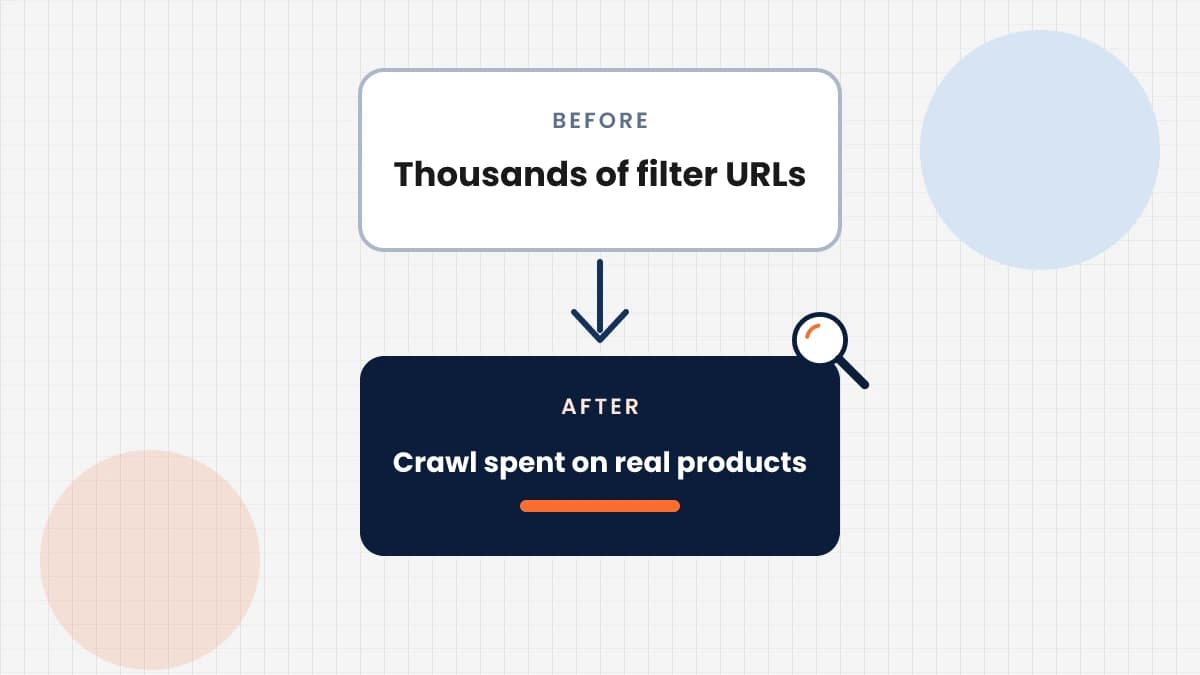
Thousands of filter URLs

Every colour, size and sort combination becomes a URL, and Google warns that crawlers then have less time for new products. Unneeded filters are blocked, and the valuable ones become proper landing pages.

Duplicates03

One product, several URLs

Products reachable through several collection paths, variants and tracking parameters split signals across URLs. Canonical tags plus internal links that point to one clean product URL keep it consistent.

  • One URL per product
  • Clean internal links
  • Variant handling
Padding04

Paying for what the platform does free

Shopify already generates canonical tags, a sitemap and robots.txt, and themes add product markup. A package should list the work beyond that, not bill for it.

  • Platform defaults checked
  • Real work listed
  • No padded line items
Categories05

Category pages with nothing to rank

Category pages often carry only a product grid. Short buying guidance, internal links and FAQs that answer real searches help category pages rank for the terms buyers use.

  • Category copy
  • Internal links
  • FAQ blocks
Reporting06

Rankings reported, revenue ignored

A list of keyword positions does not show whether SEO pays. Reports built on Analytics ecommerce data show organic orders and revenue by category.

  • Organic orders
  • Revenue by category
  • Raw-data export
Market prices, Nov 2026

01

Entry package

Seven agencies' published monthly prices: ₹15,000 to ₹65,000, median ₹30,000. Often 25 to 50 keywords and a set number of product pages.

  • Smaller catalogues
  • Check page counts
02

Growth package

Four agencies show a rupee mid tier: ₹30,000 to ₹90,000 a month, median ₹47,500.

  • More products and categories
  • Content included
03

Large catalogue package

Five agencies: ₹75,000 to ₹2,25,000 a month, median ₹99,999, monitoring hundreds to thousands of pages.

  • Large catalogues
  • Technical depth
04

What the price leaves out

Most exclude 18% GST, and none of the ecommerce package pages we checked stated a minimum term.

  • GST
  • Ask for the term
Before you sign

01

1. Page counts

How many product and category pages are improved each month, and how they are chosen.

  • Products
  • Categories
02

2. Product data

Merchant listing markup, Merchant Center feed checks and fixes for disapproved products.

  • Markup
  • Feed
03

3. Filters and duplicates

A written plan for filter URLs, variants and duplicate product paths.

  • Filter plan
  • Canonicals
04

4. Links

How links are earned and a URL list each month. No bookmarking or classified ad packages.

  • Link list
  • No spam
05

5. Revenue reporting

Organic orders and revenue by category from Analytics, in accounts you own.

  • Orders
  • Revenue
What you get

8 items, none of them extra
A store audit covering filters, duplicates, markup and Merchant Center
A written monthly scope with product and category page counts
A filter URL plan and fixes for duplicate product paths
Merchant listing markup kept in step with your product feed
Category content and FAQs written for real buyer searches
White-hat link earning, with every link listed by URL
Monthly reports on organic orders and revenue, with raw data
Analytics, Search Console and Merchant Center in your name
How it runs

  1. 01
    First weeks

    Store audit

    Indexing, filter URLs, duplicates, product markup, Merchant Center health and category gaps.

    Audit report

  2. 02
    Before start

    Written scope

    A monthly plan with product and category page counts, fixes and link earning.

    Scope · Monthly price

  3. 03
    Month 1

    Tracking

    Analytics ecommerce events, Search Console and Merchant Center in your name.

    Revenue tracking

  4. 04
    Months 1 to 2

    Technical fixes

    Filter URL rules, canonical and internal link fixes, and product markup.

    Change log

  5. 05
    Monthly

    Categories and products

    Category content, product page improvements and FAQs, to the agreed counts.

    Pages improved

  6. 06
    Monthly

    Monthly report

    Organic revenue, orders, products indexed, link list and next month's plan.

    Report · Plan

The stack

  • ShopifyShopifyStore platform
  • WooCommerceWooCommerceStore platform
  • Google Search ConsoleGoogle Search ConsoleIndexing and queries
  • Google AnalyticsGoogle AnalyticsOrganic revenue
  • Looker StudioLooker StudioMonthly reports
  • SemrushSemrushKeyword research
  • AhrefsAhrefsLink monitoring
  • Google AdsGoogle AdsShopping, if needed
FAQ

01How much do ecommerce SEO packages cost in India?
Published monthly packages from seven Indian agencies, checked in November 2026, start at ₹15,000 to ₹65,000 for an entry tier, with a median of ₹30,000. Top tiers run ₹75,000 to ₹2,25,000 a month. Most exclude 18% GST. These are market prices, not Pixlabo's. We price store SEO after auditing your catalogue, categories and filters.
02Does Shopify already handle SEO?
The basics, yes. Shopify generates canonical tags, a sitemap and a robots.txt file automatically, and its themes add product structured data. You still write titles and descriptions, set redirects and verify Search Console. An ecommerce SEO package should go beyond what Shopify does for free: category content, internal links, filter URLs, product data quality and reporting on revenue.
03What is the difference between product snippets and merchant listings?
Google uses product snippet markup for pages where people cannot buy directly, such as reviews, and merchant listing markup for pages where customers can buy from you. Merchant listings need the product name, image and an offer with a price above zero. Correct markup makes products eligible for richer results, but Google decides when to show them.
04Do I need Google Merchant Center for SEO?
It is not required, but it helps. Structured data on product pages can make products eligible for merchant listings, and a Merchant Center feed gives Google your product data directly, including price and availability. Where the two disagree, Google gives the feed priority, so keeping the feed and the product pages in step is part of good ecommerce SEO.
05How should filter and sorting URLs be handled?
Carefully. Google warns that filter combinations can create huge numbers of URLs, leaving crawlers less time for new and useful pages. Its guidance prefers blocking unneeded filter URLs in robots.txt or using URL fragments, and says canonical and nofollow tags are generally less effective in the long term. Valuable filters, such as a brand within a category, can become proper landing pages.
06How many product pages should a package optimise each month?
Published packages we checked range from about 15 product pages a month at entry level to 80 or more at the top tier, and some count category pages separately. Ask for the exact number, which pages are chosen and why. Category pages and best-selling products usually matter more than optimising every product in a large catalogue.
07How long does ecommerce SEO take to work?
Most stores see measurable movement in rankings and organic traffic within three to six months, with compounding results between six and twelve months. Technical fixes such as filter URLs and duplicate products can show sooner. Track organic revenue and orders in Google Analytics, not just rankings, so you can judge whether the package pays for itself.
08Are link building packages safe for an online store?
Many are not. Ecommerce packages we checked sell bookmarking, classified ad and comment links, and Google's spam policies name low-quality directory and bookmark links and optimised forum comments as link spam. Bought links must be tagged sponsored or nofollow. Ask for every link by URL, and prefer supplier, press and review mentions that real customers would see.

Government of India seal
MSME Registered
Government e-Marketplace — GeM